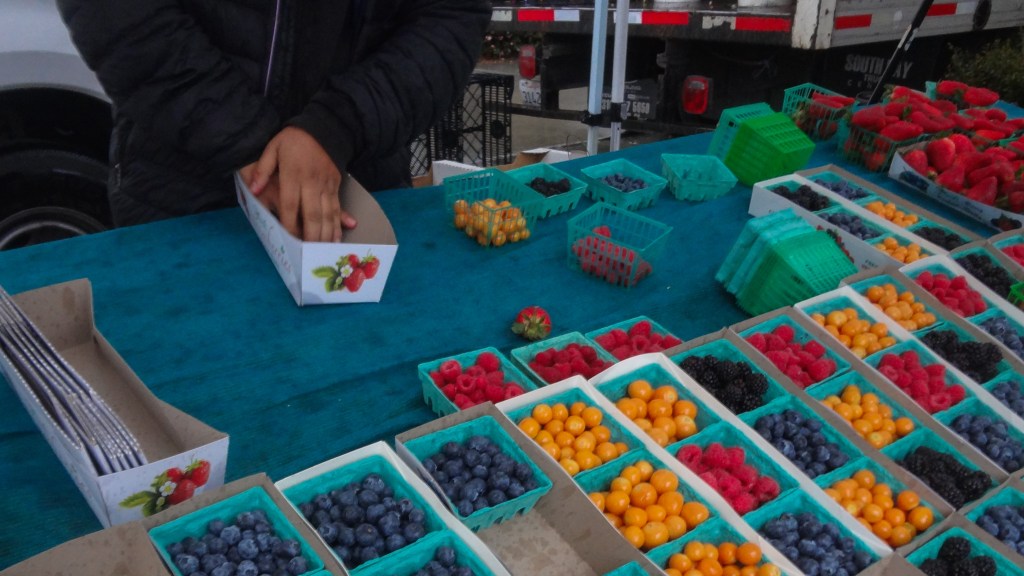
“Rain or Shine”:
Farmers’ Markets as Urban Rituals and Their Role in Creating Community and a Sense of Belonging in Post-Migration Societies
The city of San Diego experiences an average of 263 sunny days per year.
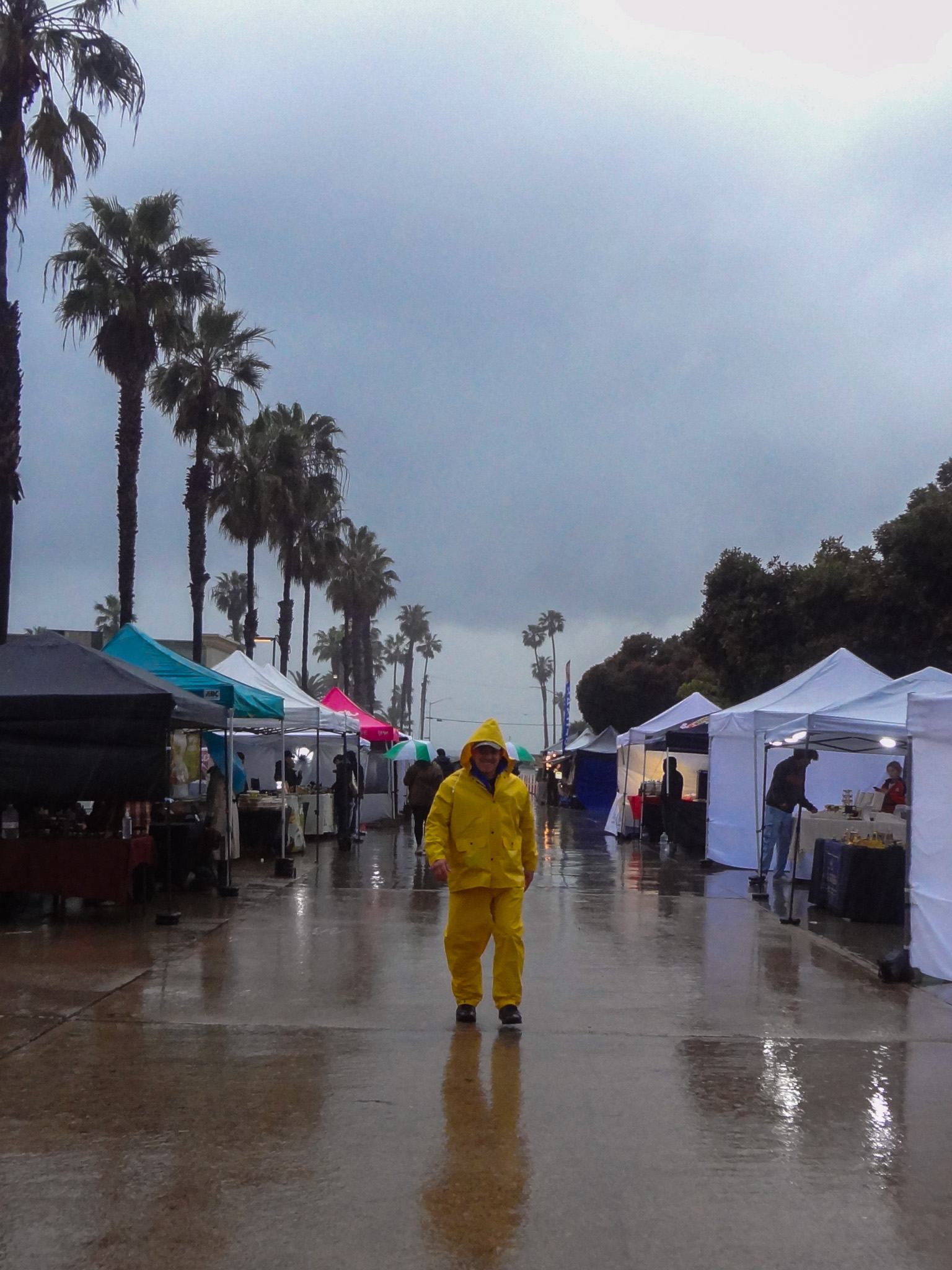
With weather like that you would think that on the rare occasion that the sun goes into hiding, the pouring rain would scare the locals into doing the same. You would be mostly right. Between the wet, cold conditions and the fact that it’s a Tuesday afternoon, there are limited events going on in the city, but the Pacific Beach Farmers’ Market is surprisingly one of them.
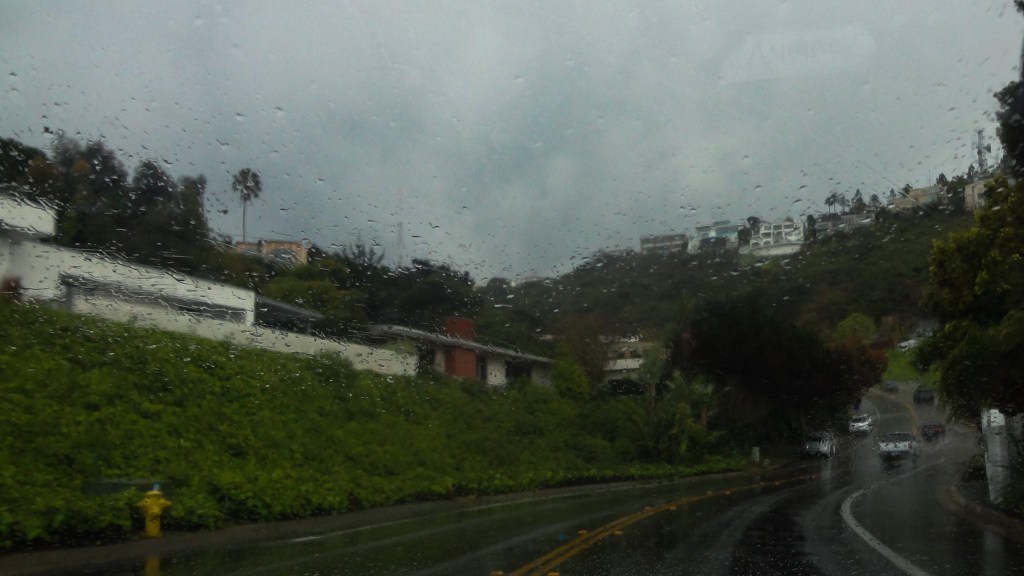
I am certain that the listing on the City of San Diego’s official website must be wrong, but a quick look at @pacificbeachmarket on Instagram proves me wrong. “Rain or shine” is splattered across every other one of their stories, as vendors assure viewers that they are not going anywhere. Until 7 pm that is.
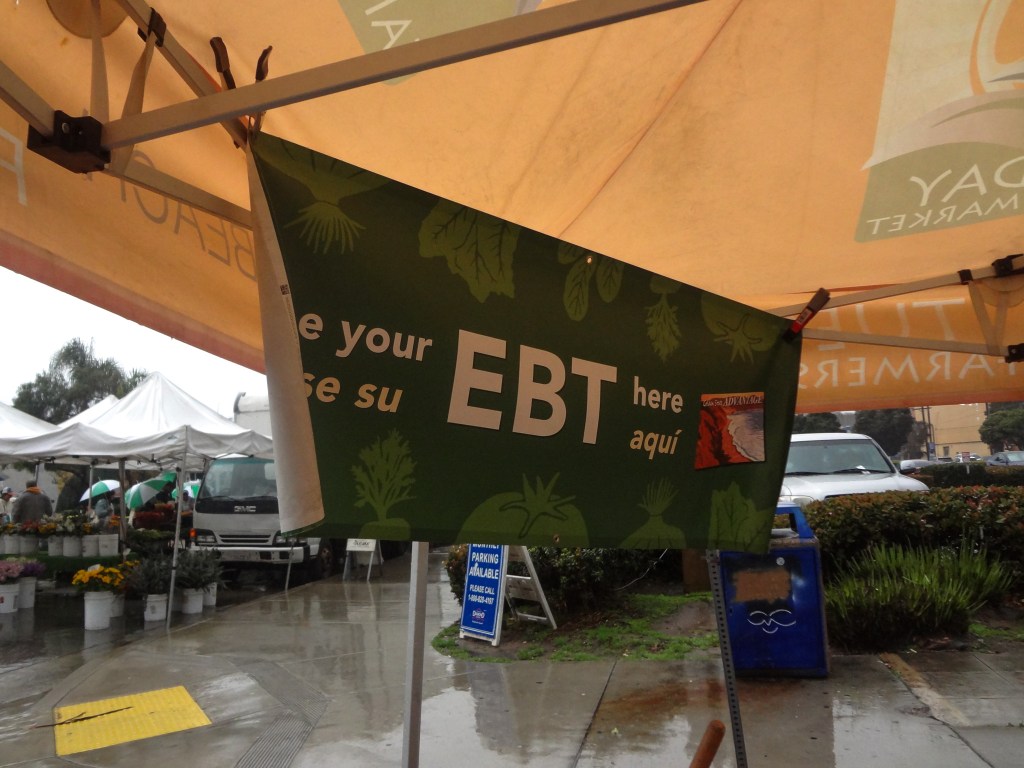
Still, I arrive at 5:30 pm worried that most vendors had already packed up for the day only to find that I was wrong again yet again. With their bright green and white umbrellas, most of the shoppers are much better prepared than I am, which means they had looked out at the raindrops hitting their windows and intentionally decided to leave the warmth of their home anyway. I knew why I was there, but I wondered what had driven shoppers here on this day. I knew potential profit was probably what had driven the vendors here, but could there be something more?
In “Urban rituals as spaces of memory and belonging: A Geneva case study”, Fiorenza Gamba and Sandro Cattacin state, “because of their relative anonymity and accessibility, public rituals – as temporary processes of inclusion or emphasizers of differences – are likely to include people with respect to their differences and any intersections of these’ (2021).
They add that in post-migration societies especially, “rituals are crucial in fostering belonging,” and they can be transformed into a common good for a territory when they are composed of
- explicit inclusiveness
- a collaborative endeavor with the strong involvement of civil society, organizations and public agencies
- an open narrative (permitting ongoing changes to the history of belonging and thus speaking to all people present at the ritual)
- a high degree of emotional inclusion, which makes it possible for participants to change their attitudes, and
- an explicit offer to make the ritual available to all (2021).
By this definition, farmers’ markets in cities like San Diego could be considered rituals that foster a sense of belonging for native and migrant residents alike.
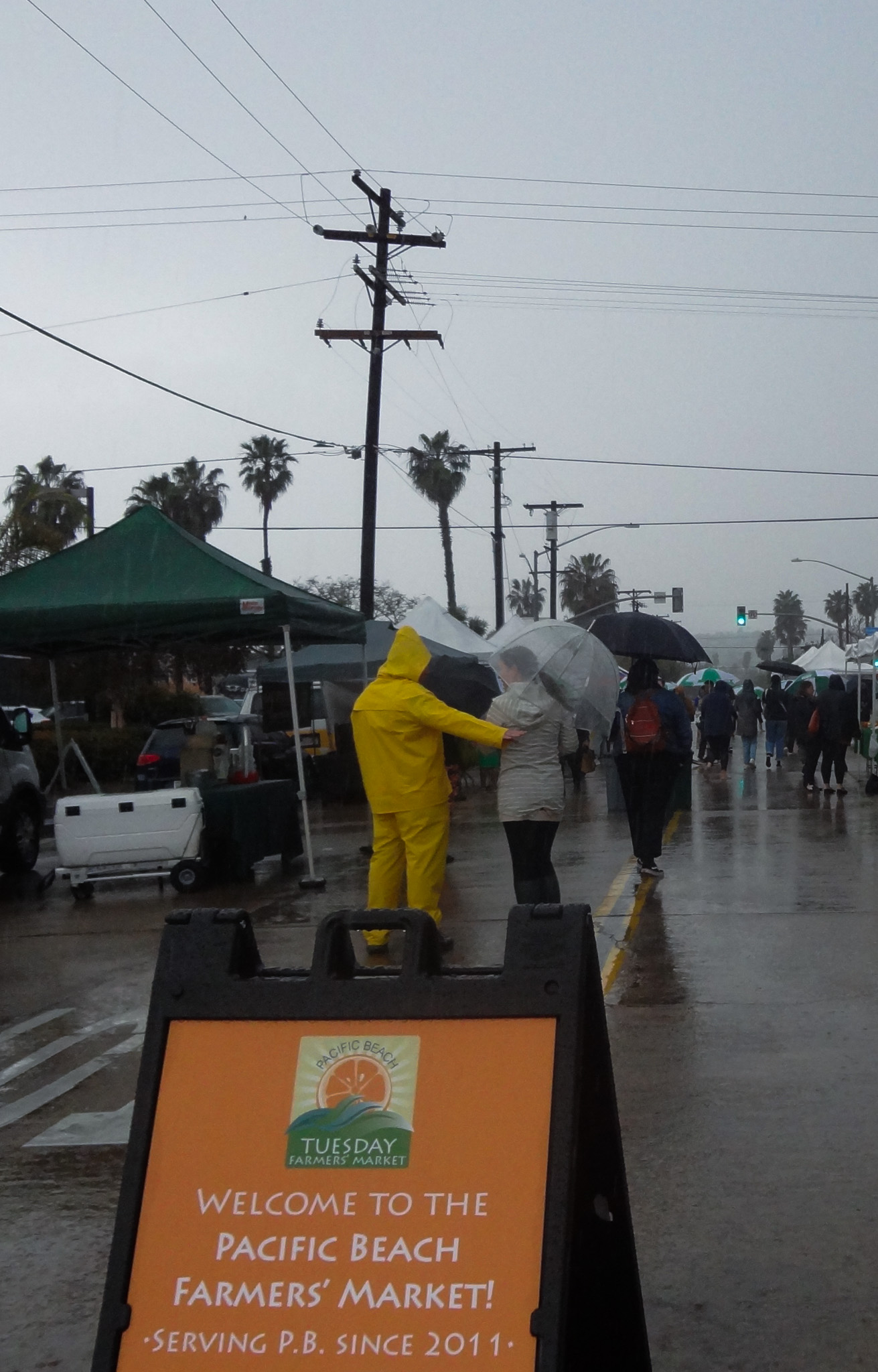
According to the PacificBeach.org website, the Pacific Beach Tuesday Farmers’ Market is hosted by Discover Pacific Beach, a non-profit organization and local business improvement district seeking to “promote, revitalize and connect the Pacific Beach community.’ They work with over 60 vendors to set up a farmers’ market every Tuesday — rain or shine as they might say.
On top of being brought together through a civil organization, I soon learn that the vendors come from a variety of places and backgrounds and that there is a surprisingly strong sense of community amongst vendors – calling each other coworkers despite coming from and representing different businesses.
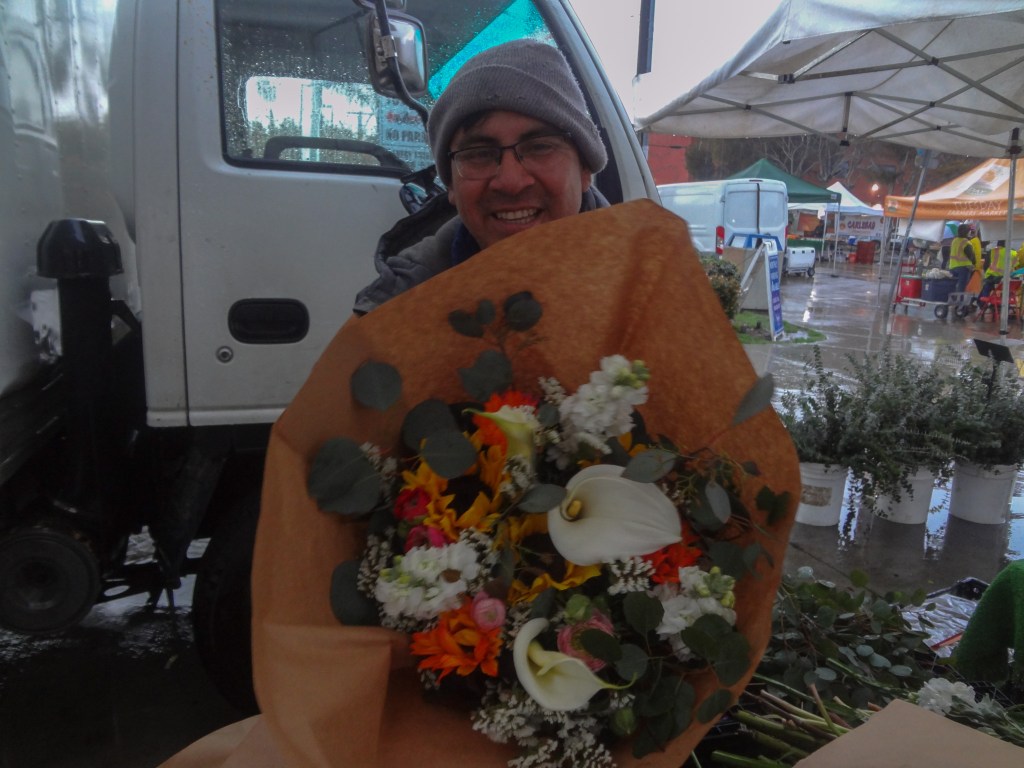
After a quick stop at the info booth (where I get asked if I need a job because there would probably be one open for me), I meet my first vendor at the tent selling flowers on the corner of Bayard and Hornblend St. The sunflowers and lilies and other flowers whose names I don’t know look particularly bright against the gray skies and the droplets dampening the leaves, even as they’re hiding under the tent, make them glisten.

$10 for a bouquet sounds like a steal so I stop by to ask the vendor if I can purchase one and whether he would mind me taking some pictures while he worked. He said he didn’t mind at all.
As I look around I learn that his name is Mario. He speak Spanish, Castellano, English, and Kang ‘Jobal Mayan. He was born in Guatemala but has lived in the United States since 1997.
“I’m still learning but I try my best all the time and this is my job.”
“Hi, Mika”, Mario says, as one of the women I spoke to at the info booth walks by. “Hey,” she responds. Looking at me, she adds, “this is one of the people I was telling you about when I was talking about community. I work next to him tomorrow morning.”
Mika works for Discover Pacific Beach, and while she used to sell for one of the vendors also present at today’s market – Tea Bazaar – she is now part of the team responsible for organizing and hosting the Tuesday markets.
When asked why she had chosen to stick around the market circle for 12 years, she replied that she loved the sense of community built into the market circuit.
“I started in my hometown and then started doing them again when I moved out here, but honestly it’s kind of just like the healthy eating community that I really like. It feels kinda like I have a family out here even though I don’t actually have any family out here,” Mika had said.
When I interrupted her to ask where she was from, she replied that she was from Bakersfield, CA. “It really just feels like a very friendly community of people that just really care about each other. Even vendor to vendor, staff,” she had added.
“Tell her about your wreath,” Mario adds. “Oh my God, I’ll show you a picture. Just come back to the booth later,” Mika says to me.
“I didn’t pay her anything, it’s true,” Mario says to me once Mika is gone. “Por eso soy muy amado, en todas partes. Le doy gracias a mi Dios. Aprecian lo que hago. But it’s the flowers, it’s not me. My work is just to put the rubber band and to cut it. That’s it,” he says as he seamlessly blends over six different types of flowers in a variety of colors for the bouquet that I’ll be taking home tonight.
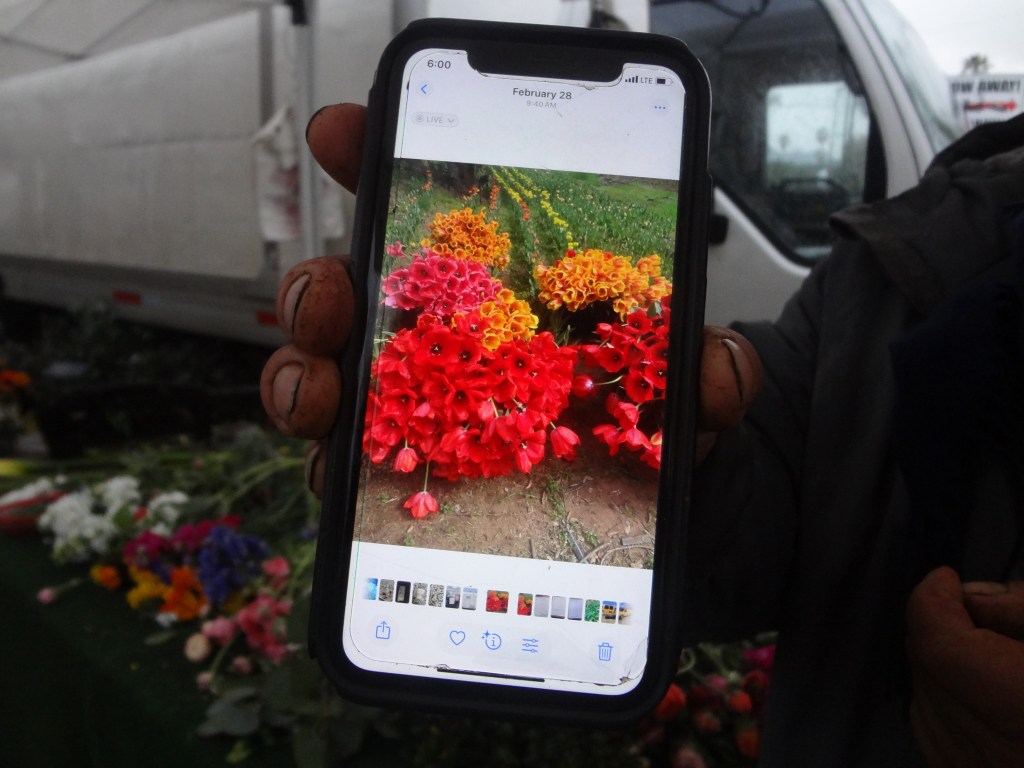
He shows me a picture of the fields where his bosses grow their products.
“I like to think of this as my office,” he says, gesturing towards the table covered in flowers.
“This is my laptop,” he says about the machine he uses to cut off the stems.
“Pero ahorita vas a ver por quien estoy tan inspirado. Mi madrecita, Andrea,” he adds, his voice growing softer.
She passed away when he was five years old. Now two of his siblings live in the United States like him, while his dad and other brother still live in Guatemala.
“Este era yo cuando tenia cuatro años,” he says. “No me da pena, look at my shoe lace, I have socks. Entonces yo vengo de mas abajo. Me da orgullo donde estoy. Ha cambiado toda mi vida.”
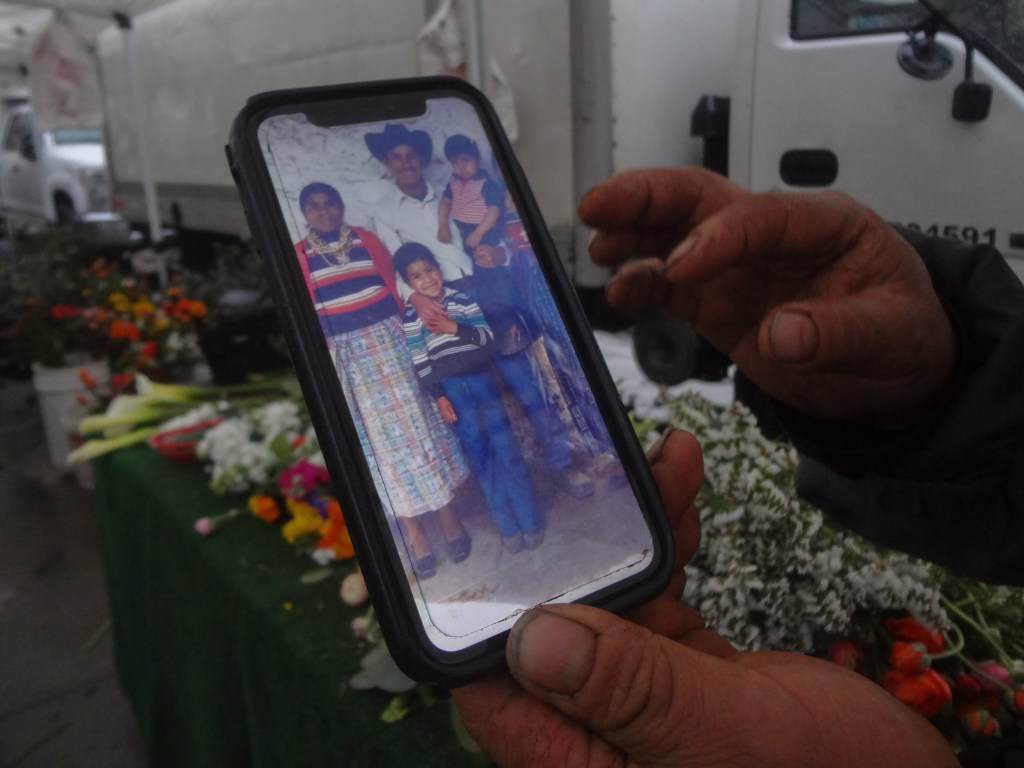
She passed away when he was five years old. Now two of his siblings live in the United States like him, while his dad and other brother still live in Guatemala
For Mario, working at the farmers’ market provides an opportunity to develop a skill he is passionate about and that helps him feel connected to his family several borders and lifetimes away.
Not only that, but it allows him to do so in a space where his efforts are recognized, his talent celebrated, his identity affirmed. Meanwhile, his place in this community has also provided him the financial means to live a better life than he could have imagined. All of these factors contribute to creating a sense of belonging, a feeling that he is exactly where he is supposed to be.
In the stand across from him is Mika’s previous employer and current favorite tea shop – Tea Bazaar.
As I approach, I’m greeted by who I would soon come to know as Sam.
She has me sample their “Wildflower’ blend and after standing umbrella-less in the rain, muscles tense and fingers frozen, the warm liquid is a welcome offering. I ask how she ended up working here.
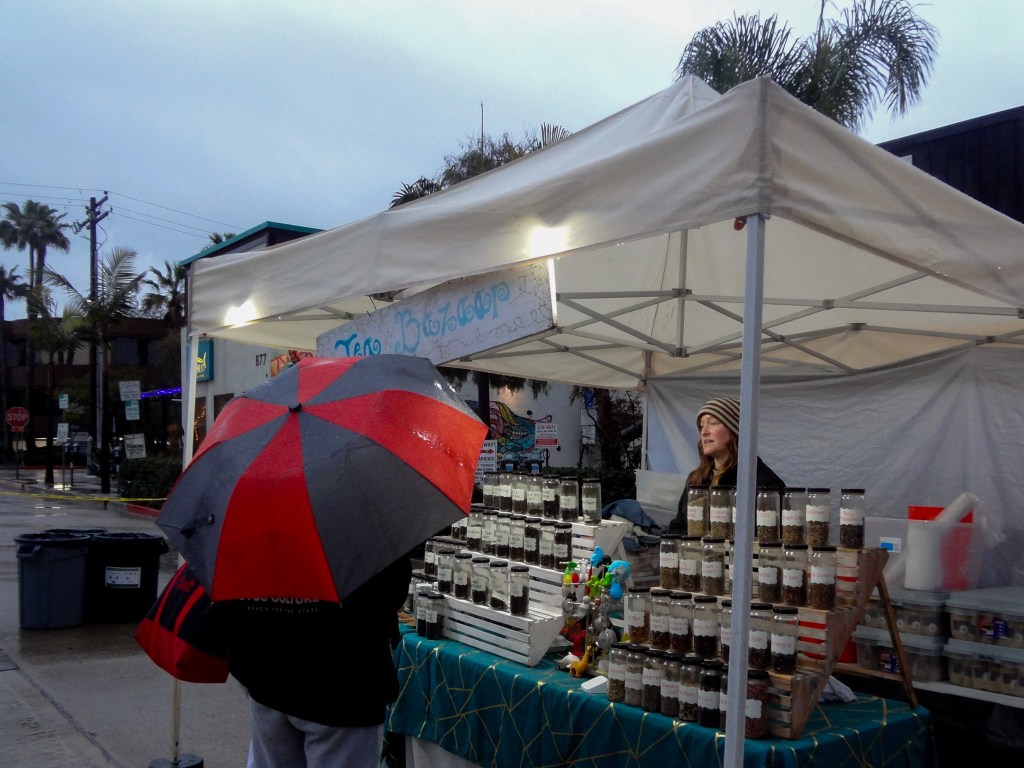
“I ended up working here because I needed a job,” she responds. “They were hiring and I’d never worked for a woman-owned business. Shocker.”
“So I was really excited about it, my grandma had passed just a year before and she’s British so I grew up drinking a whole bunch of tea, and it just kind of felt right, and now I’m a herbalist, and I know so much that I had no idea I was going to learn about,” she shares.
Like Mario, her work representing the tea shop at farmers’ markets gives her an opportunity to grow her knowledge in something she is passionate about and that makes her feel connected to her family. “I don’t work alone, I technically have coworkers because a lot of these other vendors sell at the other farmers’ markets I’m at too, so I see Ruth every Saturday and every Tuesday. I have friends over here that I see at Little Italy every week as well… and because of that I get to trade product often which makes me feel like I am escaping capitalism and somehow working on community efforts to escape the cost of living these days.”
As I finish up my tea, she poses for pictures and gives me the rundown on all their bestselling blends.
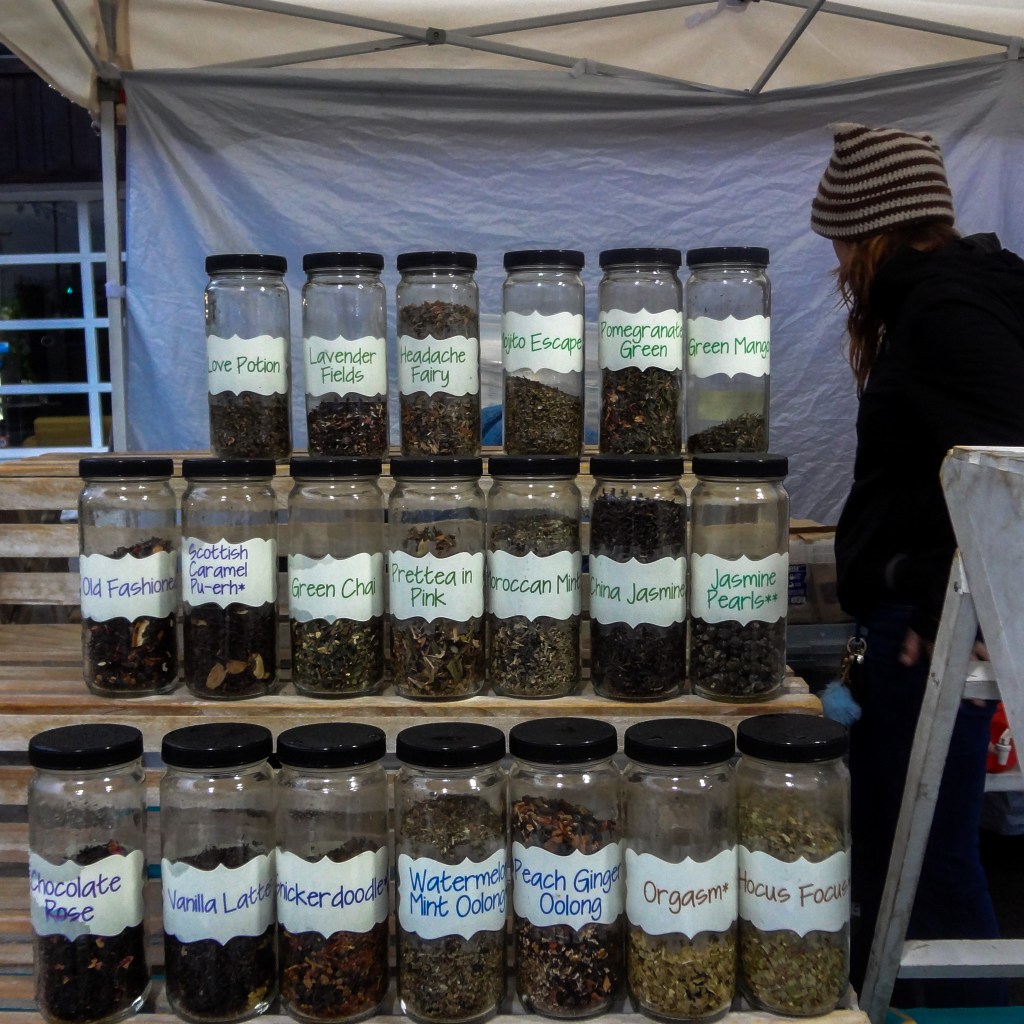
I don’t know if Marketing Specialist is part of her official title but it should be.
I walk away with a $25 bag of ‘Wildflower’ tea.


 Karina Itzel
Leave a comment